Artificial Intelligence Employment and Intellectual Property Protection Bill
At a Glance
- Employers must provide 12 months of full salary and benefits to AI-displaced workers
- Creators can opt out of AI training or receive fair compensation for their work
- Bans AI-assisted cloning of product designs, both digital and physical
- All AI-generated content must be clearly labeled for consumers
- Triggers Universal Basic Income (~$3,000/month) if AI unemployment exceeds 10%
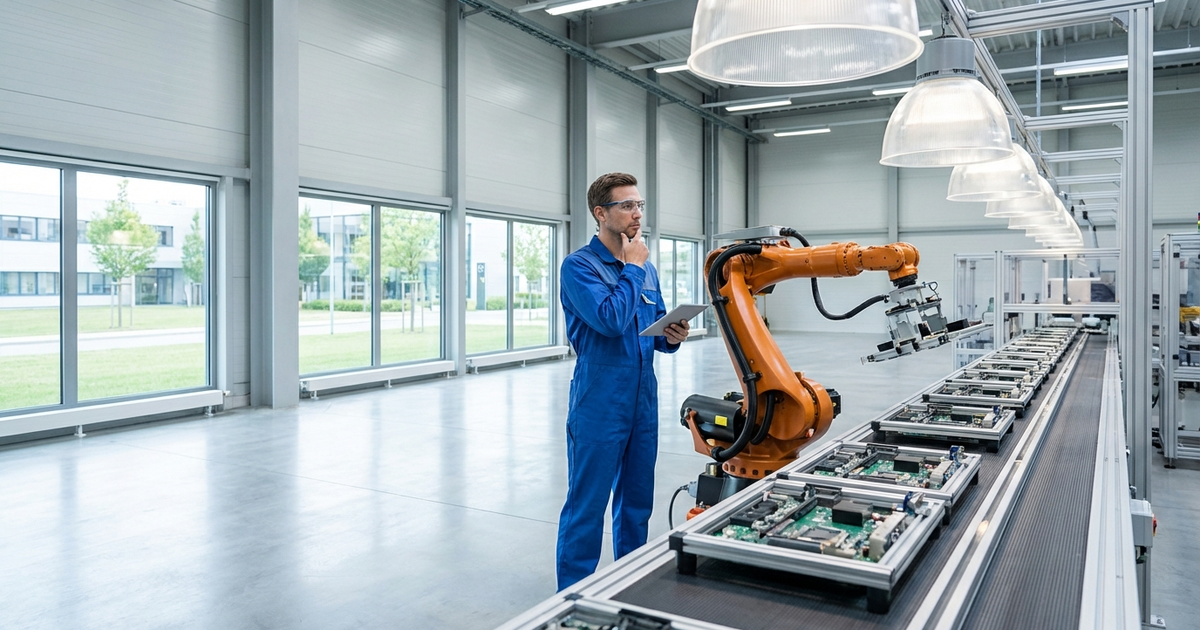
Artificial intelligence is transforming the American economy at a pace that neither workers nor creators are prepared for. Employees who spent years mastering their craft—customer service representatives, paralegals, data analysts, graphic designers, copywriters—are discovering that AI systems can perform significant portions of their jobs at a fraction of the cost. When displacement comes, it comes fast: a department of fifty is restructured to fifteen, and the workers who remain are expected to supervise the machines that replaced their colleagues. For those let go, the safety net is thin. Severance is discretionary, retraining is expensive, and the skills that defined their careers may have diminished market value overnight.
At the same time, the creative economy faces an existential challenge. AI systems are trained on vast datasets of copyrighted material—books, articles, photographs, music, software code, video—harvested from the internet without the knowledge or consent of the people who created it. A songwriter who spent years building an audience discovers that an AI model trained on her catalog can generate songs in her style on demand, competing directly with the original. A software developer finds that an AI tool has analyzed his application's interface and documentation and produced a functional clone in weeks. A journalist's investigative reporting is ingested, summarized, and republished by AI content mills that capture the audience and advertising revenue that once sustained the original work. The creators who fuel AI's capabilities receive nothing while their livelihoods erode.
These are not hypothetical concerns—they are happening now, and the pace is accelerating. Without clear rules, workers will be displaced without support, creators will be exploited without recourse, and the public will be unable to distinguish human expression from machine-generated content. But overly restrictive regulation could stifle an innovation that has genuine potential to improve productivity, healthcare, scientific research, and quality of life. The challenge is balance: protecting people without blocking progress.
This legislation strikes that balance through five pillars. First, employers must provide displaced workers with 12 months of full salary and benefits and contribute to a Future Skills Training Fund for workforce retraining. Second, intellectual property owners must be given the choice of fair compensation or exclusion of their work from AI training datasets, enforced through a public Opt-Out Registry. Third, the bill prohibits AI-generated derivative works that are not substantially transformative and bans AI-assisted cloning of product designs—both digital and physical—protecting innovators from having years of development replicated by automated analysis. Fourth, all AI-generated content must be clearly labeled so consumers know what they are reading, watching, or hearing. Fifth, the bill establishes an automatic trigger for Universal Basic Income: if AI-attributable unemployment exceeds 10 percent of the civilian labor force for two consecutive quarters, every adult American will receive a monthly payment equal to 60 percent of the national median individual wage—approximately $3,000 per month—tax-free, with no further congressional action required. The infrastructure and funding mechanism are established now so that if AI displacement becomes systemic, the safety net deploys immediately rather than waiting for Congress to act in the middle of a crisis. This framework gives businesses and AI developers the predictable rules they need while ensuring that the humans whose work and livelihoods make AI possible are not discarded in the process.
Problems the Bill Aims to Solve
Worker Displacement Without a Safety Net. As AI systems become capable of performing tasks previously done by humans, employees face job loss with little warning or support[1]. Without intervention, displaced workers may struggle financially while trying to find new employment or retrain for different careers.
Lack of Resources for Workforce Transition. Even when workers recognize the need to develop new skills, training programs can be expensive and inaccessible. There is no dedicated funding mechanism to help AI-displaced workers acquire the skills needed for emerging jobs.
Unauthorized Use of Copyrighted Material in AI Training. AI systems are frequently trained on vast datasets that include copyrighted works—articles, books, artwork, music, code—often without the knowledge, consent, or compensation of the creators[2]. This undermines the economic value of creative work.
Creators Forced into an All-or-Nothing Position. Without formal protections, IP owners currently have limited recourse. They can either accept that their work may be used without compensation or pursue costly litigation. The bill creates a middle path where creators can choose compensation or exclusion.
Tension Between Innovation and Rights Protection. Overly restrictive IP rules could slow AI development, while no rules at all harms creators. The bill attempts to balance continued AI advancement with fair treatment of those whose work contributes to that advancement.
AI-Generated Derivative Content Exploits Fair Use Protections. Current fair use doctrine does not adequately address AI systems that extract clips, text, and other elements from existing works to generate derivative content that is not substantially different from the original. Creators who invest years building original content have no meaningful recourse when AI tools are used to rapidly produce low-value imitations that compete directly with the source material, diluting its audience and undermining the creator's livelihood. While existing copyright law may technically prohibit such conduct, enforcement requires costly litigation that individual creators cannot afford—particularly when AI enables the creation of infringing works at a scale and speed that overwhelms any practical ability to pursue claims.
AI-Assisted Cloning Threatens Product Innovation. Artificial intelligence now enables bad actors to systematically analyze a product's design—whether by examining a software application's interface and documentation or by feeding photographs of a physical product into an AI system that generates 3D models and manufacturing specifications—and produce a functional clone in days or weeks, replicating what took the original creator years and significant investment to build. Existing intellectual property law does not adequately protect against this threat: copyright covers specific expression but generally not functionality or utilitarian design, design patents are narrow and expensive to obtain, trade dress requires proof of consumer recognition, and trade secret law cannot protect features that are inherently public-facing. Without a prohibition on AI-assisted cloning, innovators who bring products to market—whether software applications or physical goods—risk having their competitive advantage stripped by automated replication before they can recoup their investment.
No Safety Net Exists for Systemic AI Displacement. Current protections address individual workers displaced by specific employers, but no mechanism exists to respond if AI displacement becomes economy-wide. If tens of millions of jobs are automated within a short period, the existing unemployment insurance system—designed for cyclical downturns, not structural transformation—will be overwhelmed. Without a pre-authorized response that activates automatically, Congress would be forced to design and pass emergency legislation during a crisis, a process that history shows is slow, inadequate, and politically fraught.
Consumers Cannot Distinguish AI-Generated Content from Human-Created Content. As AI systems produce increasingly sophisticated text, images, audio, and video, the public has no reliable way to determine whether the content they consume was created by a human or generated by a machine. This opacity undermines informed decision-making, enables deception, and erodes public trust. Without mandatory labeling and notification, AI-generated content may be presented as authentic human expression in journalism, advertising, legal filings, academic work, and public discourse—with no accountability for the misrepresentation.
Artificial Intelligence Employment and Intellectual Property Protection Act
120th Congress, 2nd Session
Be it enacted by the Senate and House of Representatives of the United States of America in Congress assembled,
Sec. 1. SHORT TITLE.
This Act may be cited as the "Artificial Intelligence Employment and Intellectual Property Protection Act."
Sec. 2. DEFINITIONS.
- (1) ARTIFICIAL INTELLIGENCE SYSTEM.—The term "artificial intelligence system" means any machine-based system designed to operate with varying levels of autonomy that infers from input how to generate outputs such as predictions, content, recommendations, or decisions.
- (2) AI DISPLACEMENT.—The term "AI displacement" means the elimination of an employee's position, or a substantial reduction in the duties, hours, or compensation of an employee's position, that is primarily attributable to the adoption of an artificial intelligence system.
- (3) AFFECTED EMPLOYEE.—The term "affected employee" means an employee who has been employed for not fewer than 12 months and who experiences AI displacement.
- (4) COVERED EMPLOYER.—The term "covered employer" means any employer with 50 or more employees.
- (5) AI DEVELOPER.—The term "AI developer" means any person or entity that designs, develops, or trains an AI system using copyrighted works, patented inventions, or other protected intellectual property.
- (6) IP OWNER.—The term "IP owner" means the holder of a copyright, patent, trademark, or other intellectual property right whose protected work has been used or is proposed to be used as training data for an AI system.
- (7) SUBSTANTIAL REDUCTION.—The term "substantial reduction" means a reduction of 25 percent or more in assigned duties, scheduled hours, or total compensation.
- (8) AI-GENERATED DERIVATIVE WORK.—The term "AI-generated derivative work" means any content produced in whole or in substantial part by an artificial intelligence system that incorporates, adapts, recombines, or is otherwise based upon one or more preexisting copyrighted works, including but not limited to video, audio, text, or images extracted, transcribed, or otherwise derived from such works.
- (9) SUBSTANTIALLY TRANSFORMATIVE.—The term "substantially transformative" means that the new work adds significant original expression, meaning, or creative value beyond that contained in the source material, such that the new work serves a fundamentally different purpose or conveys a fundamentally different message than the original. Mere reformatting, rearrangement, summarization, compilation, or recombination of elements from existing works does not constitute substantial transformation.
- (10) CONTENT PLATFORM.—The term "content platform" means any online service that hosts, indexes, distributes, or monetizes user-uploaded content, including video-sharing platforms, social media services, and podcast hosting services.
- (11) PROTECTED PRODUCT.—The term "protected product" means any product, system, or device that has been commercially offered, sold, licensed, or otherwise made available to the public or to paying customers, including but not limited to—
- (a) software applications, platforms, software-as-a-service products, mobile applications, firmware, and digital tools;
- (b) consumer electronics, appliances, personal devices, and household goods;
- (c) vehicles, including automobiles, motorcycles, watercraft, aircraft, and their component systems;
- (d) machinery, tools, equipment, and industrial systems;
- (e) medical devices, scientific instruments, and laboratory equipment;
- (f) furniture, fixtures, lighting, and architectural components;
- (g) toys, sporting goods, recreational equipment, and personal accessories; and
- (h) any other tangible or digital product offered in commerce.
The term includes the product's composite design—meaning the specific combination of visual appearance, form, shape, dimensions, configuration, surface treatment, ornamentation, materials selection, color scheme, features, user interaction design, workflows, internal architecture, functional architecture, and overall aesthetic and functional character that, taken together, constitutes the product's distinct identity. The term does not include abstract ideas, general product categories, naturally occurring forms, or functional elements dictated solely by the laws of physics or by applicable regulatory requirements.
- (12) AI-ASSISTED CLONING.—The term "AI-assisted cloning" means the use of an artificial intelligence system to systematically analyze, reverse-engineer, or replicate the composite design of a protected product by ingesting, processing, or interpreting photographs, images, video, three-dimensional scans, point clouds, technical drawings, blueprints, schematics, user interfaces, user manuals, marketing materials, product listings, documentation, specifications, teardown analyses, or any other representation of the product, for the purpose of producing a functionally equivalent, visually equivalent, or substantially similar product, including but not limited to the generation of three-dimensional models, manufacturing specifications, computer-aided design files, engineering drawings, bill-of-materials documents, tooling specifications, circuit designs, software code, or prototypes.
- (13) INDEPENDENT DEVELOPMENT.—The term "independent development" means the creation of a product through original design decisions and engineering effort that does not rely on the systematic AI-assisted analysis of a specific competing product's composite design, even if the resulting product serves a similar market or offers overlapping functionality.
Sec. 3. ADVANCE NOTICE OF AI-RELATED WORKFORCE REDUCTIONS.
- (1) A covered employer planning an AI displacement affecting 10 or more employees within any 90-day period shall provide written notice not less than 90 days before the first displacement takes effect.
- (2) Notice shall be provided to each affected employee, the State dislocated worker unit, and the Secretary of Labor.
- (3) Failure to provide notice shall result in payment of an additional 60 days of salary and benefits to each affected employee.
Sec. 4. DISPLACED WORKER TRANSITION BENEFITS.
- (1) A covered employer shall provide each affected employee with continuation of full salary and all employer-provided benefits for 12 months following displacement.
- (2) Payments may be offset by wages from new employment, but shall not be reduced below 50 percent of pre-displacement salary.
- (3) Any agreement by an employee to waive these benefits shall be void and unenforceable.
Sec. 5. EMPLOYER CONTRIBUTIONS TO FUTURE SKILLS TRAINING FUND.
- (1) A covered employer carrying out an AI displacement shall contribute to the Fund an amount equal to 10 percent of the combined annual salaries of all affected employees.
- (2) Contributions shall be paid within 30 days of displacement and shall be deductible as an ordinary business expense.
Sec. 6. FUTURE SKILLS TRAINING PROGRAM.
- (1) There is established within the Department of Labor a Future Skills Training Fund and Program.
- (2) Amounts shall be used for retraining grants to affected employees, grants to educational institutions developing curricula in high-demand fields, career counseling and job placement services, and workforce adaptation research.
- (3) Individual retraining grants shall not exceed $25,000 per year for a maximum of 2 years.
Sec. 7. INTELLECTUAL PROPERTY RIGHTS IN AI TRAINING DATA.
- (1) Each IP owner whose protected work is used or proposed to be used as training data shall have the right to elect either fair compensation under Section 8 or exclusion of the work from the training dataset.
- (2) An AI developer shall, before using any protected work, make reasonable efforts to identify and notify the IP owner.
- (3) The Register of Copyrights shall establish a publicly accessible Opt-Out Registry in which IP owners may register works that shall not be used as AI training data.
- (4) An AI developer that uses a work listed in the Opt-Out Registry shall be liable for willful infringement.
Sec. 8. FAIR COMPENSATION FRAMEWORK.
- (1) An IP owner who elects compensation and the AI developer shall negotiate in good faith.
- (2) Factors shall include market value, extent of contribution to the training dataset, commercial revenue generated, availability of substitutes, and transformative nature of the AI system's use.
- (3) If parties fail to agree within 90 days, either may submit to binding arbitration under rules established by the Register of Copyrights.
- (4) Compensation shall not be less than the amount under a reasonable licensing arrangement.
Sec. 9. AI TRAINING DATA DISCLOSURE.
- (1) Each AI developer shall publish and maintain a disclosure identifying categories and sources of training data, whether protected works were included, and compliance steps taken.
- (2) Disclosures shall be updated at least annually.
Sec. 10. PROHIBITION ON NON-TRANSFORMATIVE AI-GENERATED DERIVATIVE WORKS.
- (1) PROHIBITION.—No person or entity shall use an artificial intelligence system to create, distribute, publish, or monetize an AI-generated derivative work that is not substantially transformative of the preexisting copyrighted work or works from which it is derived.
- (2) PRESUMPTION OF NON-TRANSFORMATION.—An AI-generated derivative work shall be presumed not to be substantially transformative if it—
- (a) incorporates clips, excerpts, transcriptions, or other identifiable elements from a copyrighted work without adding significant original commentary, criticism, analysis, or creative expression;
- (b) serves the same purpose or targets the same audience as the original work such that it functions as a market substitute; or
- (c) is produced through automated extraction, recombination, or summarization of one or more copyrighted works with minimal human creative input.
- (3) REBUTTABLE PRESUMPTION.—The presumption under paragraph (2) may be rebutted by clear and convincing evidence that the new work adds substantial original expression and serves a fundamentally different purpose than the source material.
- (4) PLATFORM RESPONSIBILITIES.—A content platform shall—
- (a) establish and maintain a process by which rights holders may submit claims that content hosted on the platform constitutes a non-transformative AI-generated derivative work;
- (b) upon receipt of a facially valid claim, remove or disable access to the disputed content within 72 hours, pending resolution;
- (c) provide the uploader with notice of the claim and an opportunity to submit a counter-notice demonstrating that the work is substantially transformative; and
- (d) restore content within 14 business days of receiving a valid counter-notice unless the claimant initiates legal proceedings.
- (5) RIGHT OF ACTION.—An IP owner whose copyrighted work has been used to create a non-transformative AI-generated derivative work shall have a private right of action against the person or entity that created, distributed, or monetized such work. The court may award—
- (a) actual damages and any profits attributable to the infringing work;
- (b) statutory damages of not less than $10,000 and not more than $150,000 per work infringed, at the election of the rights holder;
- (c) reasonable attorney's fees and costs to the prevailing rights holder; and
- (d) injunctive relief, including orders requiring the removal of infringing content and the disgorgement of revenue derived therefrom.
- (6) REVENUE RECOVERY.—Where a non-transformative AI-generated derivative work has generated advertising revenue, subscription revenue, or other monetization on a content platform, the rights holder shall be entitled to recover the greater of actual damages or the full amount of revenue generated by the infringing work during the period of infringement.
- (7) SAFE HARBOR LIMITATION.—A content platform that complies with the obligations set forth in paragraph (4) shall not be liable for damages under this section solely by reason of hosting the infringing content, provided that the platform did not participate in the creation of the work and acted expeditiously to remove or disable access upon receiving a valid claim.
Sec. 11. PROHIBITION ON AI-ASSISTED CLONING OF PRODUCT DESIGNS.
- (1) PROHIBITION.—No person or entity shall engage in AI-assisted cloning of a protected product. It shall be unlawful to use an artificial intelligence system to systematically analyze a protected product's design—whether by ingesting photographs, images, three-dimensional scans, technical drawings, user interfaces, documentation, specifications, or any other representation of the product—for the purpose of producing a product that replicates the composite design of the original.
- (2) PRESUMPTION OF AI-ASSISTED CLONING.—A product shall be presumed to be the result of AI-assisted cloning if—
- (a) the product replicates a substantial portion of the composite design of an identified protected product, including specific combinations of visual appearance, form, features, workflows, functional architecture, or overall aesthetic and functional character;
- (b) the product was developed or released within a timeframe substantially shorter than would be expected through independent development of a product of comparable complexity; and
- (c) the developer or manufacturer of the product had access to the protected product, images or scans thereof, its documentation, or its publicly available specifications prior to or during development.
- (3) REBUTTABLE PRESUMPTION.—The presumption under paragraph (2) may be rebutted by clear and convincing evidence demonstrating independent development, including contemporaneous design documents, engineering records, sketches, prototypes, version control records, or other evidence establishing that the product's design originated from the developer's own creative and engineering effort rather than from AI-assisted analysis of the protected product.
- (4) EXCLUSIONS.—This section shall not apply to—
- (a) the development of products that implement general-purpose functionality, standard design patterns, common industry conventions, generic geometric forms, or widely used open-source components, provided that the developer does not replicate the specific composite design of an identified protected product;
- (b) interoperability development, including the creation of products designed to connect to, interface with, or operate alongside a protected product through published or documented specifications;
- (c) security research or safety testing conducted in good faith for the purpose of identifying and reporting vulnerabilities or hazards;
- (d) development performed under a license or written authorization from the owner of the protected product;
- (e) repair, maintenance, or the manufacture of replacement parts for a protected product, provided such activity does not result in the production of a substantially complete replica of the protected product; or
- (f) design elements dictated solely by applicable law, regulation, industry safety standards, or functional requirements imposed by the physical or technical environment in which the product must operate.
- (5) RIGHT OF ACTION.—The owner of a protected product that has been the subject of AI-assisted cloning shall have a private right of action against the person or entity that developed, manufactured, distributed, or commercialized the cloned product. The court may award—
- (a) actual damages, including lost revenue and diminished market value attributable to the cloned product;
- (b) statutory damages of not less than $50,000 and not more than $5,000,000 per protected product cloned, at the election of the rights holder;
- (c) disgorgement of all profits derived from the cloned product;
- (d) reasonable attorney's fees and costs to the prevailing rights holder; and
- (e) injunctive relief, including orders requiring the cessation of manufacture and distribution and the removal of the cloned product from all marketplaces and platforms.
- (6) MARKETPLACE OBLIGATIONS.—Any digital marketplace, application distribution platform, e-commerce platform, or manufacturing service that hosts, distributes, or facilitates the production of products shall—
- (a) establish and maintain a process by which rights holders may submit claims that a listed or hosted product constitutes an AI-assisted clone;
- (b) upon receipt of a facially valid claim supported by reasonable evidence, suspend distribution or production of the disputed product within 72 hours pending resolution;
- (c) provide the developer or manufacturer of the disputed product with notice of the claim and an opportunity to submit a counter-notice demonstrating independent development; and
- (d) restore the product within 14 business days of receiving a valid counter-notice unless the claimant initiates legal proceedings.
- (7) SAFE HARBOR FOR MARKETPLACES.—A marketplace, platform, or manufacturing service that complies with the obligations set forth in paragraph (6) shall not be liable for damages under this section solely by reason of hosting, distributing, or facilitating the production of the cloned product, provided that it did not participate in the design of the product and acted expeditiously upon receiving a valid claim.
Sec. 12. MANDATORY MARKING AND NOTIFICATION OF AI-GENERATED CONTENT.
- (1) MARKING REQUIREMENT.—Any person or entity that creates, distributes, or publishes content generated in whole or in substantial part by an artificial intelligence system shall clearly and conspicuously mark such content as AI-generated. The marking shall be—
- (a) in a form that is reasonably likely to be seen and understood by the intended audience;
- (b) affixed to, embedded within, or prominently displayed alongside the content at the point of presentation; and
- (c) in the case of digital content, embedded in the metadata of the file using standards established by the Secretary of Commerce under paragraph (4).
- (2) NOTIFICATION REQUIREMENT.—Any person or entity that provides AI-generated content to a consumer, client, or end user shall, at or before the time of delivery, notify the recipient that the content was generated in whole or in substantial part by an artificial intelligence system. Notification shall—
- (a) identify the content as AI-generated;
- (b) identify, to the extent practicable, the artificial intelligence system or systems used to generate the content; and
- (c) be provided in a clear, conspicuous, and accessible manner appropriate to the medium of delivery.
- (3) SCOPE.—The requirements of this section shall apply to text, images, audio, video, and any other form of content generated by an artificial intelligence system, including content that has been substantially modified by an artificial intelligence system. The requirements shall not apply to—
- (a) content generated by an artificial intelligence system and used solely for internal purposes by the entity that generated it, provided the content is not distributed to any external party;
- (b) minor automated functions such as spell-check, grammar correction, or basic formatting that do not substantially alter the meaning or substance of human-authored content; or
- (c) content generated for purposes of national security by a Federal agency, where the head of such agency certifies that marking or notification would compromise a classified operation.
- (4) STANDARDS.—Not later than one year after the date of enactment of this Act, the Secretary of Commerce, in consultation with the National Institute of Standards and Technology and industry stakeholders, shall promulgate standards for—
- (a) machine-readable metadata labels for AI-generated digital content;
- (b) watermarking techniques for AI-generated images, audio, and video; and
- (c) uniform visual or textual marking formats for consumer-facing AI-generated content.
- (5) PLATFORM OBLIGATIONS.—Any online platform, as defined by the Secretary of Commerce, that hosts or distributes user-generated content shall—
- (a) implement reasonable measures to detect and label AI-generated content uploaded to the platform;
- (b) preserve any AI-generated content markings or metadata present in uploaded content; and
- (c) provide users with a mechanism to report unmarked AI-generated content.
Sec. 13. PENALTIES.
- (1) An employer that fails to comply with Section 4 or 5 shall be liable for unpaid benefits plus equal liquidated damages, and subject to civil penalties of up to $50,000 per violation.
- (2) An AI developer that fails to comply with Sections 7, 8, or 9 shall be subject to civil penalties up to $500,000 for disclosure failures and up to $1,000,000 for using Opt-Out Registry works, plus treble damages for willful violations.
- (3) In addition to the private right of action and damages provided under Section 10(5) and (6), any person or entity that violates Section 10(1) shall be subject to a civil penalty of up to $250,000 per violation. A content platform that fails to comply with the obligations set forth in Section 10(4) shall be subject to a civil penalty of up to $500,000 per violation.
- (4) In addition to the private right of action and damages provided under Section 11(5), any person or entity that violates Section 11(1) shall be subject to a civil penalty of up to $500,000 per violation. A marketplace, platform, or manufacturing service that fails to comply with the obligations set forth in Section 11(6) shall be subject to a civil penalty of up to $1,000,000 per violation.
- (5) Any person or entity that fails to comply with Section 12 shall be subject to—
- (a) a civil penalty of up to $50,000 per violation for failure to mark or notify, with each instance of unmarked or unnotified content constituting a separate violation;
- (b) a civil penalty of up to $500,000 per violation for a pattern or practice of noncompliance; and
- (c) in the case of an online platform that fails to comply with Section 12(5), a civil penalty of up to $1,000,000 per violation.
Sec. 14. AI DISPLACEMENT INDEX.
- (1) ESTABLISHMENT.—Not later than one year after enactment, the Bureau of Labor Statistics shall develop and publish a quarterly AI Displacement Index measuring the percentage of the civilian labor force whose unemployment is primarily attributable to the adoption of artificial intelligence systems.
- (2) METHODOLOGY.—The Index shall be calculated using—
- (a) advance notice filings submitted by covered employers under Section 3 of this Act;
- (b) data collected through the Current Population Survey and Job Openings and Labor Turnover Survey, supplemented with questions designed to identify AI-related displacement;
- (c) employer attestations filed under the Worker Adjustment and Retraining Notification Act (29 U.S.C. 2101 et seq.) that identify AI adoption as a contributing factor; and
- (d) administrative data from State unemployment insurance programs in which claimants identify AI displacement as the reason for separation.
- (3) PUBLICATION.—The Commissioner of Labor Statistics shall publish the AI Displacement Index not later than 60 days after the end of each calendar quarter, beginning with the first full quarter following the one-year development period.
- (4) INDEPENDENT REVIEW.—The Government Accountability Office shall review the methodology and accuracy of the Index biennially and report its findings to Congress.
Sec. 15. UNIVERSAL BASIC INCOME TRIGGER.
- (1) ACTIVATION.—If the AI Displacement Index published under Section 14 exceeds 10 percent of the civilian labor force for two consecutive calendar quarters, the Universal Basic Income program established under this section shall activate automatically on the first day of the month following publication of the second qualifying Index, without further congressional action.
- (2) ELIGIBLE INDIVIDUAL.—Every individual who is—
- (a) a citizen of the United States or a lawful permanent resident;
- (b) aged 18 years or older; and
- (c) not incarcerated in a Federal, State, or local correctional facility
shall be eligible to receive monthly payments under this section.
- (3) PAYMENT AMOUNT.—Each eligible individual shall receive a monthly payment equal to 60 percent of the national median individual wage as most recently published by the Bureau of Labor Statistics, divided by 12. The payment amount shall be recalculated annually based on updated median wage data published by the Bureau.
- (4) TAX-EXEMPT STATUS.—Payments received under this section shall not constitute gross income for purposes of the Internal Revenue Code of 1986 and shall not be subject to Federal, State, or local income tax. Payments shall not be considered income for purposes of determining eligibility for any Federal means-tested benefit program.
- (5) PAYMENT MECHANISM.—The Secretary of the Treasury shall distribute payments by direct deposit to accounts designated by the recipient, or by prepaid debit card for individuals without bank accounts. The Social Security Administration shall administer enrollment and eligibility verification using existing infrastructure.
- (6) DEACTIVATION.—When the AI Displacement Index falls below 7 percent of the civilian labor force for four consecutive calendar quarters, payments shall be phased down as follows—
- (a) reduced to 75 percent of the full amount for the first three months following deactivation;
- (b) reduced to 50 percent for months four through six;
- (c) reduced to 25 percent for months seven through nine; and
- (d) terminated after nine months.
If the Index exceeds 10 percent again during the phase-down period, full payments shall resume immediately.
Sec. 16. UNIVERSAL BASIC INCOME FUNDING.
- (1) ESTABLISHMENT.—There is established within the Treasury the AI Economic Stabilization Fund, to be administered by the Secretary of the Treasury, for the purpose of financing payments under Section 15.
- (2) DEPOSITS.—The following amounts shall be deposited into the Fund—
- (a) employer contributions collected under Section 5 of this Act;
- (b) civil penalties collected under Section 13 of this Act;
- (c) an automation surcharge equal to 5 percent of gross annual revenue derived from AI systems, assessed on any covered employer that has reduced its workforce by more than 25 percent through AI displacement within any rolling 36-month period, as reported through advance notice filings under Section 3; and
- (d) such sums as may be appropriated by Congress.
- (3) PRE-FUNDING.—Beginning in the first fiscal year after enactment, the Secretary shall invest Fund deposits in United States Treasury securities. The Fund shall accumulate reserves during the period before activation to ensure immediate solvency upon triggering.
- (4) AUTHORIZATION OF APPROPRIATIONS.—There are authorized to be appropriated to the Fund such sums as are necessary to ensure full and timely payment of all obligations under Section 15 upon activation.
- (5) ANNUAL REPORT.—The Secretary shall submit to Congress an annual report on Fund receipts, investment returns, projected obligations under various AI displacement scenarios, and recommendations regarding the adequacy of funding levels.
Sec. 17. EFFECTIVE DATE.
- (1) Sections 3 through 6 shall take effect 180 days after enactment.
- (2) Sections 7 through 13 shall take effect one year after enactment.
- (3) Section 14 shall take effect on the date of enactment, with the first AI Displacement Index published not later than 15 months after enactment.
- (4) Sections 15 and 16 shall take effect on the date of enactment, with payments commencing only upon activation under Section 15(1).
Sources
- U.S. Government Accountability Office, GAO-24-105980, "Artificial Intelligence: Agencies Have Begun Implementation but Need to Complete Key Requirements." https://www.gao.gov/products/gao-24-105980
- U.S. Copyright Office, "Copyright and Artificial Intelligence, Part 1: Digital Replicas," Report of the Register of Copyrights, July 2024. https://www.copyright.gov/ai/Copyright-and-Artificial-Intelligence-Part-1-Digital-Replicas-Report.pdf